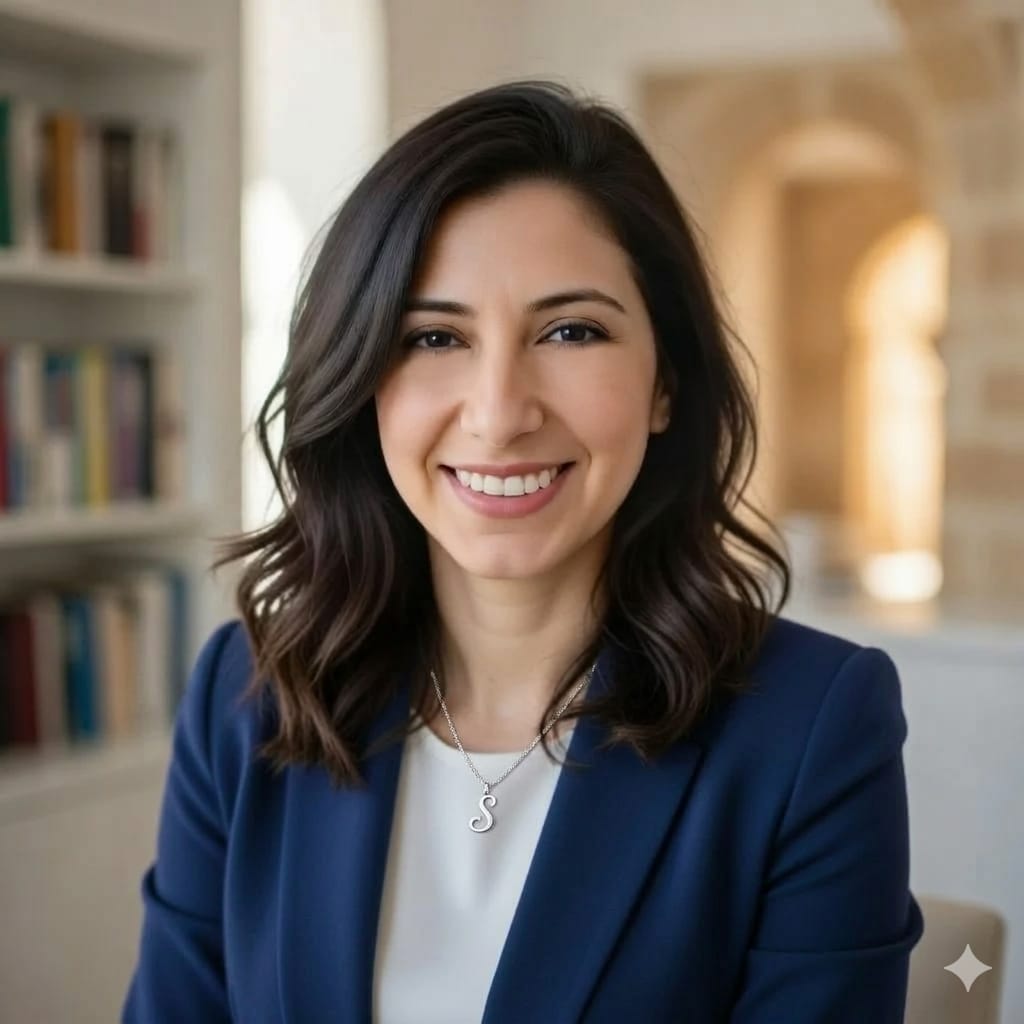
I grew up in Beirut, and from the age of four, my world was shaped by two languages. Arabic was the language of home, of family, of the neighbourhood. French was the language of school. Specifically, it was the language of the lycée, a system of French-model education that was woven into Lebanese middle-class life for generations. You did your maths in French. Your literature, your history, your science. Arabic and French did not compete; they simply divided life between them.
That kind of immersion is hard to replicate later in life, which is part of why I think so many adult learners find French difficult. They are approaching it as a foreign language, learning rules and lists and conjugation tables. I never experienced French that way. It was just there, as natural as waking up in the morning. That does not make me better than anyone who learned it later; it just means I have a very different relationship with the language, and I try to bring some of that naturalness into the lessons I teach.
In Lebanon, French was also the language of opportunity. Universities used it. The professions used it. If you wanted to work in law, medicine, engineering, or academia, a strong command of French was not optional. So the stakes were real, and the standards were high. I learned to write formally in French before I could drive. I learned to argue, to analyse, to persuade in French before I had any particular interest in linguistics. It was simply what was required, and I was fortunate to be in an environment where it was also completely normal.
When I came to the UK on a PhD scholarship, French stayed with me, though my daily context shifted entirely to English. England was wonderful and bewildering in equal measure. What I noticed, fairly quickly, was how many people here wanted to speak French and did not quite know how to reach it. They had done it at school. They had a GCSE or an A-level, or a fondness for France and French culture, but the language felt blocked, locked behind years of disuse or behind a fear of sounding foolish. I recognised that feeling from watching my own students later. Not because I had felt it myself, but because I could see exactly where the block was.
I started teaching French privately, almost by accident, after a colleague asked whether I could help his daughter prepare for her GCSE speaking exam. I said yes, she did well, and word spread the way word tends to spread. Within a year I had a small roster of private students across all levels: complete beginners who just wanted to manage a holiday in Paris, professionals preparing for client meetings in Lyon, parents learning alongside their children. Every one of them was different, and I discovered quite quickly that the textbook approach did not suit most of them. They did not need grammar first. They needed to hear and speak and make mistakes and try again.
Today I teach entirely online, which means my students are spread across the UK. I work with beginners and with confident intermediate speakers who want to reach the next level. I prepare GCSE students for their exams, and I help professionals who need French for work. Each lesson is built around the student in front of me, not around a syllabus designed for a classroom of thirty.
I have been doing this for more than twenty years now, and I am still genuinely interested in every student I work with. Where they have come from, where they want to get to, what is stopping them. French opened every door for me as a child. My job is to open that same door for my students.