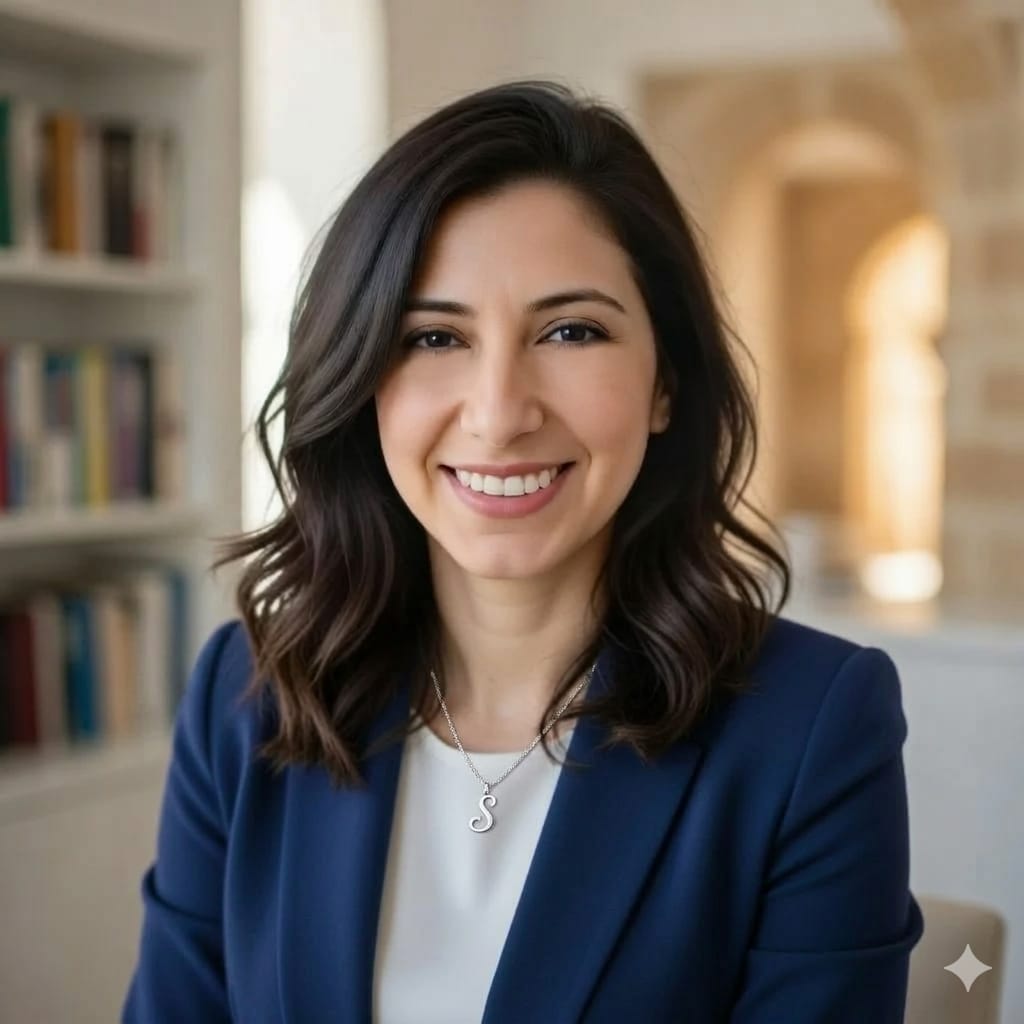
 Dr Suzanne Kobeisse
I have been teaching French for a long time, and every January I see the same thing. People arrive with enormous ambitions. They want to be fluent by summer. They plan to do an hour a day, seven days a week. They have downloaded three apps and ordered two textbooks. And then, somewhere around the third week of February, life reasserts itself, the hour becomes twenty minutes, the twenty minutes becomes nothing, and by March the whole resolution has quietly evaporated.
I do not say this to discourage you. I say it because I have watched it happen enough times to understand where the problem lies. It is not lack of motivation. It is lack of calibration. The goal was wrong to begin with.
So this January, let us talk about goals that actually work.
The first question: what do you mean by "learning French"?
Before setting a target, you need to be honest about what you are trying to achieve. "Learning French" can mean twenty different things. It can mean ordering coffee without panic in a Paris café. It can mean reading a French novel. It can mean working in a French-speaking environment. It can mean passing a GCSE. It can mean reconnecting with a grandparent. These are not the same goal, and they require different amounts of time, different kinds of practice, and different definitions of success.
The students I see progress most quickly are not necessarily the most talented or the most disciplined. They are the ones who know exactly what they want and why. So before you commit to a goal for 2026, write down a single sentence: I want to be able to do this specific thing in French by this date. Keep it that concrete.
If you are a beginner: the 100-word foundation
If you are starting from very little or nothing, here is a realistic beginner target for a year of consistent work: a core vocabulary of around 100-150 high-frequency words, a grasp of the present tense and a basic understanding of the past, and the ability to introduce yourself, ask simple questions, and understand slow, clear French speech in familiar contexts.
That sounds modest. It is not. Those 100 words, chosen carefully, will cover a remarkable amount of ground. The verbes essentiels (essential verbs) alone, être (to be), avoir (to have), aller (to go), faire (to make or do), vouloir (to want), pouvoir (to be able to), will unlock hundreds of sentences once you know how to conjugate them.
The most useful thing a beginner can do is prioritise speaking and listening over reading and writing. Get comfortable with the sounds of the language. French sounds very different from how it looks on the page, and the sooner your ear adjusts, the less you will feel like you are translating everything in your head.
A realistic beginner schedule: two to three sessions a week, each around thirty minutes. More than that is fine when life allows. Less than that and you lose momentum. Thirty minutes, done consistently, beats two hours done occasionally every time.
If you are intermediate: the conversation threshold
Intermediate learners are in a strange position. They know enough to understand they do not know very much, which can feel demoralising. The grammar has got complicated. The vocabulary gaps are becoming visible. And speaking feels like wading through something thick.
If this sounds familiar, your goal for 2026 should be a specific, concrete conversation target: to hold a five-minute conversation on a topic you care about, with a French speaker, without having to stop and look anything up. Just five minutes. Not a perfect five minutes. A real one.
The way to get there is to stop studying French and start using it. That means speaking out loud, often, even imperfectly. It means choosing input (podcasts, films, audio) slightly above your comfort level. It means accepting that you will make mistakes and that the mistakes are the learning.
Intermediate learners often over-invest in grammar and under-invest in vocabulary. At this stage, every new high-frequency word you acquire matters more than another conjugation table. Aim to add ten new words a week to your active vocabulary, not just words you recognise, but words you can use yourself. In a year, that is over 500 words. Combined with what you already have, that is conversational territory.
If you are advanced: unassisted reading
Advanced learners sometimes plateau. The big leaps are behind them, progress is slower, and it can be hard to know what to work on. My suggestion for an advanced goal in 2026 is this: read one piece of unassisted French text per week and understand it without a dictionary.
By unassisted, I mean actually unassisted. Not stopping to look up every unfamiliar word. Not relying on a translation. Reading the way a French person reads: inferring from context, tolerating ambiguity, moving forward even when something is not entirely clear.
Start with something accessible: a French news article on a topic you follow anyway, a short column in Le Monde, a food blog, a sports piece. Not literary French. Contemporary, journalistic, colloquial French. This kind of reading, done consistently, will improve your vocabulary, sharpen your instinct for idiomatic phrasing, and give you a feel for how educated French people actually write and think. It is, in my view, one of the most efficient things an advanced learner can do.
One thing that applies at every level
Whatever your level, build your French into something you are already doing rather than adding it as a separate task to an already full life. Listen to a French podcast on your commute. Watch one French episode a week of something you would enjoy in English. Change your phone language to French for a month. Make French ambient, not effortful.
The students who make consistent progress are not the ones who do French for an hour every day with perfect discipline. They are the ones for whom French has become a natural part of the texture of their week. That is what I am hoping for you in 2026.
Bonne chance, et bonne année. Good luck, and a good year to you.